The Klondike Mine
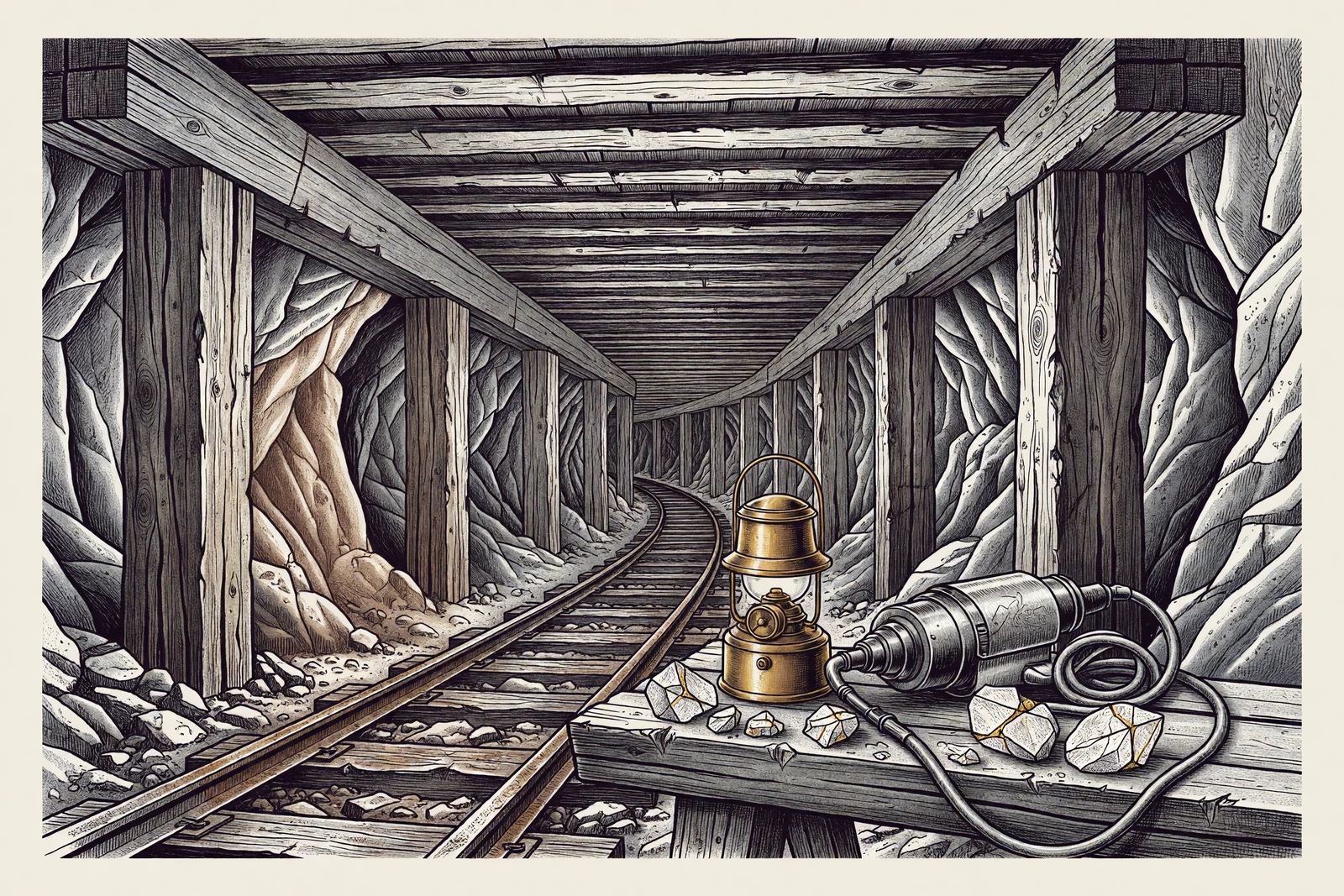
The teaching job at Nogales was a pleasure in every way except for the pay which was $90 a month for nine months. I was planning on getting married and needed to buy clothing, a ring and the first months rent on an apartment. So when the school year ended in May 1938 I began to look for a summer job. A fellow teacher, Pearn Prather, also wanted to work so we went together to Utah where Peters Construction Co., my old Roosevelt Dam outfit, was driving a tunnel into a mountain to bring water to the west side of the Wasatch Mountain Range. We signed up on WPA in Manti County Utah and drove up to the work site which was at the ten thousand foot elevation. There were snow banks all around and the place looked like a disaster area. The tunnel caved in most every day and a number of men had been seriously injured. We boarded a mine train and went into the tunnel about half a mile where we stopped the train and told the operator to take us back outside. We wanted to work very badly but not at that place.
We went on to Salt Lake City where we found the USA Cafe offering meals at very low prices. We could get a hamburger steak, two vegetables , bread, butter, coffee and a piece of pie for fifteen cents. We spent a few days there but could not find work so we drove south to Chloride, Arizona where Pearn's sister lived. We managed to get jobs at the Klondike Mine about 15 miles northwest of Chloride. The mining effort at the Klondike was financed by Sears Roebuck and Co. and all equipment was first class. Pearn was paid $5 a day as an experienced miner. I was paid $4 a day as a "Mucker." We each paid $1 a day for board and room and the food was excellent.
The Klondike Mine had first been worked by the English who took the ore down to the Colorado River six miles away. They floated it down the river to the Gulf of California on barges. Here it was loaded on sailing ships and taken around Cape Horn to Cornwall, England where the gold and silver were finally extracted. The drifts (tunnels) dug by the English were straight and smooth with the tops arched very precisely. Our mining was not precise at all. The drifts wandered around following veins of paying ore as mapped by a "sampler" who furnished chips of rock to an assayer who determined whether the samples were rich enough to pay. We could make a small profit if the ore ran seven dollars a ton in gold and silver. Gold prices were controlled by the Federal Government and were pegged at $35 per ounce at that time. I do not know what the price of silver was. We hit one pocket where the ore ran $5,500 per ton but that was rare.
In my opinion, mining is a tough way to earn a living. It is a dirty strenuous activity and is quite dangerous. The day shift goes in and drills holes for dynamite using pneumatic, liners stopers or jack hammers. They work in pairs with the miner in charge and the mucker as helper. The miner knows how to place the holes in order to deepen a shaft, extend a drift or enlarge a stope. He is also expert in loading dynamite and detonators in the drilled holes to break out the ore bearing rock in a desired way.
The day crew is finished with a shift when they explode the charges in the holes they drilled. The second shift then comes in and mucks out the loose ore and trams it to the ore bin. They then drill new holes, load them with dynamite, explode them and leave the loose ore for the next shift to muck out.
If you are working in a "stope", ( an underground room) you work on top of a pile of ore, drilling holes in the "ceiling" and there is no mucking because the ore is taken out below through chutes and the ore pile is lowered just enough to make room for the next crew to come in and drill another round of holes.
I worked in some stopes at the Klondike that were only eighteen inches high and slanted up at a forty five degree angle. We laid there on our stomachs beside a big stoper and let the mud and water run down our collars. The drills pounded away and cut into the rock. Water was forced down a hole in the center of the drill and it washed the cuttings out and it came down into our collars. The noise was deafening and there was always a lot of oily smoke discharged from the drilling machines. It was not a fun job but there were those who would not work at anything else.
There was constant danger from loose rock falling from overhead. There was also danger from explosive charges in broken ore piles where the charge had failed to detonate as planned. I have uncovered many sticks of dynamite in muck piles and the detonating caps were still inserted in the explosives. Fortunately they did not go off when I dug them out but great care had to be exercised.
The crew at the Klondike was quite a mixture. Many were from the East where they had worked in tunnel jobs but could no longer pass the physical examinations required there. They came West to work in small mining operations where no exams were required prior to employment. There were coal miners from Utah where the mines had closed down and the miners needed jobs. There were also men from other lines of work who were mining because it was the only job they could get. Our "Boss" was an ex-owner of a mine and he had just sold out and was marking time until the economic situation improved.
I probably should tell you that the miners were very protective of me. They would not allow me to go in the most dangerous parts of the mine. They even overruled the Boss on some occasions. They also had all kinds of advice for me when they learned I was getting married in August. I cannot repeat their advice here but it was both amusing and serious. On my last day on the job they would not allow me to go underground. Each of them knew dozens of workers who had fatal accidents on their "last day." The final weekend of work for me the miners put on a dinner dance in my honor. We went to a hotel in Kingman and dined and danced in style. I made a little speech of appreciation, thanking them for all their help and advice. I regretted leaving such wonderful friends but was most thankful to leave the mine without an injury. I had that money I needed to become a husband.